So you’ve decided to install a new deck. Design plans and measurements are already completed. You’ve done your homework and chosen high-quality, tempered wood. You know which top-notch stain you’re going to use to make the deck aesthetically pleasing. Now, in order for your decking project to be a … [Read more...]
Is Buying Exotic Lumber Bad for the Environment? Part 1

In a recent post, we mentioned the idea that contrary to popular belief, composite decking is not actually more environmentally friendly than tropical hardwood decking. A key factor in understanding this issue is to realize that buying exotic lumber actually benefits the environment and does this in … [Read more...]
How to Finish Walnut for Maximum Depth and Color

Few domestic hardwoods command as much admiration as Walnut. Known for its rich chocolate-brown tones, subtle purple undertones, and elegant grain patterns, Walnut has long been a favorite for fine furniture, cabinetry, and architectural millwork. But while the raw material is beautiful on its own, … [Read more...]
Guide to Domestic Softwoods: Alaskan Yellow Cedar

While hardwoods certainly have their place, don’t neglect to use softwoods for appropriate projects! After supplying only hardwoods for centuries, J. Gibson McIlvain Lumber began sourcing quality softwoods just over a decade ago. While the process did require a bit of a learning curve, we now have a … [Read more...]
Constantly Shifting Grading Standards for Plywood and Millwork, Pt 1

While plywood and moulding prices have basically remained the same, hardwood and softwood prices have continually climbed. Typically, a price change for raw materials translates into price changes for manufactured or engineered wood products also (even if there is a time lapse). What would keep … [Read more...]
Guide to Domestic Hardwoods: Poplar and Cherry
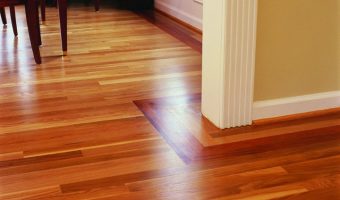
We’ve already looked at Red and White Oak and two types of Maple. Rounding out 5 of the most significant North American hardwood species, we’ll take a look at Poplar and Cherry. Really, these species don’t have much in common besides the fact that they’re both North American hardwoods. But each has … [Read more...]
How To Ensure Lacey Act Compliance, Part 4

In continuation of Part 3, we’ll look at the remaining 4 standards that resulted from the U.S. Department of Justice working with Gibson Guitars to create lumber usage policies to reflect “due diligence.” We’re delighted to share, alongside those policies, J. Gibson McIlvain’s own policies, already … [Read more...]
Guide to Domestic Hardwoods: Hard and Soft Maple

The great diversity of American forests can be credited to temperate climates, and because of the special conditions that contribute to thriving hardwood forests, most of them grow in the Eastern U.S. Of course, that comes in handy for us here at J. Gibson McIlvain Lumber, since our base of … [Read more...]
The Secrets to Installing Wide Plank Flooring, Part 3

Don’t let wide plank flooring's current popularity lead you to believe that it’s easy to achieve. Choosing, sourcing, and preparing wide plank lumber for installation is the easy part; the installation itself is pivotal. Because every step along the way to achieving a wide plank flooring is more … [Read more...]
How to Properly Space Decking Boards, Part 3

If you’re getting ready to install a deck, you’ll probably find that figuring out how far apart to space your boards is one of the most challenging parts of the process (see Part 1 & 2). There are a whole host of factors that come into play when making your final decision. After taking into … [Read more...]
Poor Forestry Management Isn’t the Cause for All Lumber Shortages, Part 2

When it comes to contemporary limitations of in-demand species like African Mahogany, many people believe that lumber shortages are always caused by unsustainable forestry or a lack of natural resources. The Mahogany scarcity, like the Poplar crisis, is caused by factors within the lumber market … [Read more...]
Lumber Drying: Basics of Air Drying

Do you know what aspect of your lumber is perhaps more important than its species, its origin, and even its grade? The answer is the way the lumber has been dried. No matter how wonderful your lumber was for starters, if it’s dried too quickly, it can become worthless. But the damage caused by … [Read more...]
What Happens to Hardwood Between the Forest and Your Job Site?
When a bundle of Walnut, White Oak, Cherry, Sapele, Mahogany, or another hardwood arrives at a shop or job site, it is easy to think of the lumber as the beginning of the process. In reality, that bundle represents one of the final stages of a journey that may have started months or even years … [Read more...]
Walnut Wood: FAQs Before Buying or Working with It
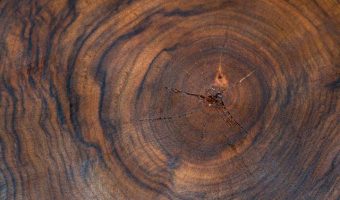
Walnut wood - most commonly Black Walnut - is one of the most respected and desirable hardwoods available in the United States. Known for its deep, rich color, elegant grain, and excellent workability, Walnut has long been favored for fine furniture, cabinetry, and architectural woodwork. For anyone … [Read more...]
How to Properly Space Decking Boards, Part 2

Decking installation is both a science and an art. Besides picking wood that is going to look attractive, you have to consider how well it’s going to hold up over time. One of the main factors to think about is wood shrinkage and expansion as it relates to deck board spacing (see Part 1). In this … [Read more...]
Help Save the Rainforest – By Buying Tropical Lumber

Perhaps no other misconception about the lumber industry is as widespread - or as false. Perhaps it would be true, or might be true, in a hypothetical world where money grew on trees - except that money could only be accessible by damaging the trees from which the paper came to print the money. … [Read more...]
- « Previous Page
- 1
- 2
- 3
- 4
- …
- 6
- Next Page »