So far in our series, we’ve discussed the journey your decking boards take from the forest to the job site, as well as some ways to prepare the boards upon arrival (see Parts 1, 2, 3 & 4). Any discussion of this topic would be incomplete without covering one of the most basic preparation and … [Read more...]
What You Should Know About Ipe – and Why We Love It!
While the limited availability and rising price point of Ipe can sometimes make it inaccessible or impractical, Ipe is still the best option out there when it comes to tropical decking species. This Brazilian beauty has a lifespan of more than 40 years, adding long-term value and visual appeal. But … [Read more...]
Lumber Color Change Demystified: 4 Unusual Species
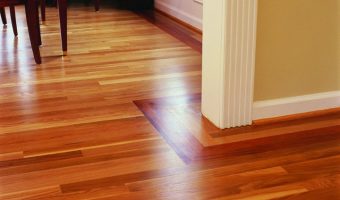
In addition to understanding lumber color change, in general, it can be helpful to understand the unique color-change scenarios of some particular species. Four lumber species stand out as having especially unique color-changing standard properties, varying greatly from their freshly milled color to … [Read more...]
Understanding & Responding to Changes in Grading Categories for Walnut Lumber

Changes in grading systems understandably make us raise an eyebrow. After all, when it comes to manufactured lumber products, the obvious beneficiaries of that sliding scale end up being the manufacturers. While the situation is different for solid lumber, one common thread runs through both: … [Read more...]
Looking Between the Layers of Hardwood Plywood, Part 1

J. Gibson McIlvain has a long legacy of sourcing quality hardwood lumber, but in recent years we’ve also expanded into other markets to better serve the needs of our customers. We’ve ventured into the arenas of millwork and decking as well as softwoods. Many people may not realize that we also carry … [Read more...]
What Any Decking Lumber Needs Before it’s a Finished Product, Part 3

We all know how important first impressions are, especially when it comes to creating satisfied customers! So as important as it is to avoid bend or buckle and to smooth rough spots, none of those things will be as obvious as serious as appearance-only issues such as fluctuations in color, ground-in … [Read more...]
Lumber Drying for Novices, Part 1

In any discussion of wood movement or gaps between decking boards, knowledge about the wood drying process — and the nature of how wood naturally soaks up and sheds moisture — is often assumed. Wood is hygroscopic by nature, as described in this video by Wood Work Web; the capillary action and … [Read more...]
Tips & Tricks for Color Matching Lumber – Part Four

After reading our first three articles in this series (see Parts 1, 2 & 3), you may feel ready to give up on color matching your wood. Not so fast! There’s plenty you can do to achieve your desired result of a near-perfect color-matched deck. Find a Reputable Lumber Dealer If you locate a … [Read more...]
How to Properly Prepare & Maintain Tropical Hardwood Decking, Part 4
If you use decking boards made from domestic hardwoods, such as Pine or Red Cedar, they require acclimation once they reach their destination (see Parts 1, 2 & 3 in our series). This is even truer if you go with tropical decking boards that originate in the Amazon, such as Ipe or Cumaru. They … [Read more...]
Tips & Tricks for Color Matching Lumber – Part Three

Besides the wood grain itself, several things can impact the color of your lumber (see Parts 1 & 2). These include natural weather phenomena like rain, sunshine, and wind, regional climactic differences. In this article, we’ll explore some of the ways these factors come into play when it comes … [Read more...]
What Any Decking Lumber Needs Before It’s a Finished Product, Part 2

Once you realize what you’re up against (see Part 1), we hope you’re ready to take the steps necessary to convert your decking boards into a finished product. Grain-Related Issues As you work to transform your decking lumber into a finished product, one concern will be dealing with torn grain or … [Read more...]
Why Walnut’s Grading Scale Is More Liberal Than Its Counterparts
Now that you understand the distinctions between how Walnut is graded by the NHLA compared to other species (see Part 1), you’re probably wondering why Walnut gets off so easily. The answer is fairly simple: Basically, Walnut is different from most North American species, so it gets treated … [Read more...]
Comparing NHLA Guidelines for Walnut with That of Other Domestic Species

While all our domestic lumber species here at J Gibson McIlvain Lumber are graded according to NHLA (National Hardwood Lumber Association) guidelines, Walnut is, in some ways, in a league of its own. Many customers don’t understand the unique distinctions that set Walnut apart from other North … [Read more...]
The Lacey Act and Lumber Legality, Part 2

Many people, even within the lumber industry, had not been too concerned about Lacey Act compliance until the infamous Gibson Guitar case. In 2011, the well known guitar maker’s Tennessee headquarters was raided, under the premise that its Madagascar ebony could have been illegally sourced. As … [Read more...]
How to Properly Prepare & Maintain Tropical Hardwood Decking, Part 3

Once you have your decking boards at the job site and you’re ready to install them, it’s time to start doing what you can do to help them look their best (see Parts 1 & 2). This involves two main steps: sanding, acclimation, and cleaning. In this article, we’ll look at the first of these three … [Read more...]
The Lacey Act and Lumber Legality, Part 1

How the lumber impacts the environment is definitely an important issue. If you’re a builder or end-use lumber customer in the US, it should be increasingly important to you, too. Combined with CITES regulations, Lacey Act regulations in the US have made everyone in the supply chain increasingly … [Read more...]
- « Previous Page
- 1
- …
- 3
- 4
- 5
- 6
- Next Page »