One of the most important things to remember when designing with lumber is also one of the easiest to overlook: wood is not a made-to-order raw material.
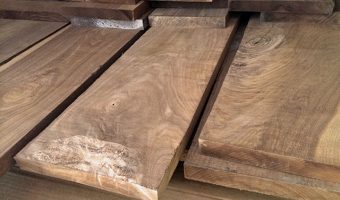
A manufacturer can produce steel, plastic, glass, or an engineered product according to tightly controlled dimensions. A tree grows according to biology and its environment. Every log has a finite diameter and length, and the boards sawn from it contain natural characteristics such as knots, color variation, grain patterns, sapwood, heartwood, and other features that cannot simply be specified away.
That distinction matters when natural wood becomes part of an architectural or manufacturing specification. A design may be entirely possible on paper while requiring lumber dimensions, lengths, appearance characteristics, or quantities that are difficult and expensive to obtain in the real world.
This is where value engineering can make an enormous difference. When the lumber supplier becomes involved early enough, seemingly minor changes to a specification can sometimes reduce material cost and waste substantially without noticeably changing the finished project. The goal isn’t to cheapen the design. It is to understand where the cost is coming from and determine whether that cost is actually contributing value to the finished product.

What Does Value Engineering Mean When You’re Working with Lumber?
Value engineering is sometimes misunderstood as little more than finding a cheaper substitute after a project has exceeded its budget. Done properly, it is much more useful than that.
With lumber, value engineering means examining the relationship between the design, the characteristics of the species, available grades and dimensions, manufacturing requirements, yield, and the finished appearance or performance the customer actually needs. The objective is to preserve the things that matter while identifying requirements that add considerable expense without adding comparable value. Sometimes that involves considering another species. Just as often, however, the better solution is a small adjustment to width, thickness, length, grade, or the way a component is manufactured.
Suppose an architectural detail calls for unusually wide Mahogany moulding. The additional width may make almost no perceptible difference once the moulding is installed, but producing that component could require substantially wider rough boards. Wider clear boards occur less frequently in a log, so obtaining enough of them for a large project can reduce yield, require more sorting, extend lead times, and increase material cost.
If reducing the finished moulding by an inch or two preserves the architectural intent while allowing the component to be produced much more efficiently from available lumber, the project has gained value without sacrificing quality. That is value engineering.
The Tree Doesn’t Know What the Blueprint Says
A specification can request almost any combination of species, width, length, grade, grain, and color. The fact that those requirements appear on a drawing does not mean trees will reliably produce boards that satisfy them. Every additional restriction reduces the portion of available lumber that qualifies for the job. Requiring long boards narrows the pool. Requiring unusually wide boards narrows it further. Add a highly restrictive grade, particular grain orientation, or narrow color range and the amount of usable material can become surprisingly small.
The issue is not necessarily that the lumber cannot be found. With enough time, inventory, sorting, and money, many difficult specifications can be filled. The more useful question is whether satisfying every one of those requirements creates enough value in the finished project to justify what it costs.
This is where early communication between the designer, manufacturer, builder, and lumber supplier becomes valuable. If a difficult requirement is essential to the design, everyone can plan around it. If it isn’t essential, modifying it before material is purchased is much easier than discovering the problem after bids have been submitted or production is ready to begin.

Small Dimensional Changes Can Have a Large Effect on Yield
Lumber is normally purchased larger than the finished component because machining removes material. A finished part may need to be ripped to width, planed to thickness, moulded into a profile, trimmed for defects, or cut to final length. The relationship between the rough board and the finished component therefore has a direct effect on yield. This is one reason a seemingly insignificant dimensional change can sometimes produce substantial savings.
Imagine that a finished component is specified at a width that requires moving into the next practical range of rough lumber. The customer isn’t simply paying for the additional fraction of an inch visible in the finished piece. The specification may require purchasing significantly wider boards, and some of that additional material will disappear as waste during machining. Multiply that difference across hundreds or thousands of linear feet and a small design decision can become an expensive one.
The same principle applies to thickness. If a finished component can be produced efficiently from a commonly available rough thickness, specifying slightly more material may force the project into a thicker and more expensive starting product. Whether that difference matters depends on the species and component, which is precisely why these conversations are best held before the specification is finalized.
Length Specifications Can Become Expensive Quickly
Long clear boards are another area where the natural limits of trees collide with architectural drawings. There are certainly applications where long lengths matter. Eliminating joints may be important to the appearance of a prominent architectural element, and some components genuinely require continuous pieces for structural or manufacturing reasons. In those situations, paying for long material may be entirely justified.
Problems arise when an unusually long specification is carried throughout a project even though many of the finished components do not actually require it. If a project calls for 20-foot material, for example, the supplier has to locate boards capable of yielding those lengths. The shorter portions of otherwise excellent boards may no longer be useful for that particular order. As the required quantity increases, finding enough qualifying material can require substantially more inventory and sorting.
If the design can accommodate shorter lengths or strategically located joints without compromising appearance or performance, the improvement in yield can be significant. Again, the correct answer depends on the project. Value engineering isn’t about eliminating long boards; it is about reserving expensive material characteristics for places where they provide a genuine benefit.

Color Matching Presents a Different Kind of Challenge
Color creates another set of expectations that can be difficult to reconcile with a natural material. This is particularly important on large architectural projects, flooring installations, millwork packages, and other applications where many individual boards will appear together. Wood from the same species can vary naturally from tree to tree and sometimes within a single tree. Growing region, soil and environmental conditions, heartwood and sapwood, grain orientation, oxidation, exposure to light, and finishing can all influence what we perceive as color.
Walnut provides an excellent example. American Black Walnut is prized for its rich heartwood, but anyone familiar with the species knows that natural Walnut is not one uniform shade of dark brown. Individual boards can display considerable variation, and sapwood introduces an even stronger contrast. Steaming can help moderate some color differences between heartwood and sapwood, but it does not transform natural lumber into a manufactured product with identical color from one board to the next.
When a specification combines tight color requirements with unusual lengths, widths, or grades, the challenge compounds. Material that qualifies dimensionally may be rejected for appearance, while boards with the desired color may not provide the required dimensions. The amount of lumber that must be sorted to fill the order increases, and so does the cost.
Decide How Much Color Consistency the Project Actually Needs
A request for “color matched” lumber can mean very different things to different people. One customer may simply want to avoid dramatic light-to-dark transitions in adjacent boards. Another may expect every piece in a room to fall within a very narrow color range. Those expectations should be clarified before lumber is selected.
On some projects, careful board selection and thoughtful placement can provide all the visual consistency the design requires. Rather than rejecting every board that differs slightly, installers or millworkers can distribute natural variation across the project so that it appears intentional.
Finishing can also help bring an installation together, although stain should not be viewed as a magic solution capable of making fundamentally different boards identical. The starting color, grain, density, and absorption characteristics of individual boards continue to influence the finished appearance. In other cases, a very narrow color range really is important. That requirement can be accommodated, but it should be recognized for what it is: an additional selection criterion that can affect yield, availability, lead time, and price.
Grade Should Match the Finished Component
Grade is another area where paying for “better” lumber does not necessarily produce a better finished project. A manufacturer cutting relatively short components may be able to work efficiently with boards containing natural characteristics that can simply be cut around. Purchasing exceptionally clear, long boards for those parts may increase material cost without improving the final product.
A manufacturer producing long clear mouldings has a very different requirement. In that application, paying for a grade that provides the necessary clear cuttings may improve yield enough to justify the higher lumber price.
This is why value engineering requires more information than a species and total board-foot quantity. The supplier needs to understand what the customer is producing. Finished dimensions, cutting bills, acceptable characteristics, appearance requirements, and production capabilities can all influence which lumber represents the best value.
Sometimes Another Species Is the Right Answer—but Not Automatically
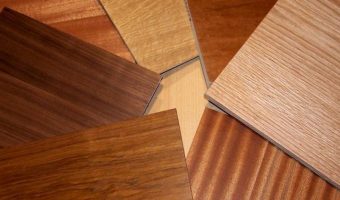
Species substitution is probably the form of value engineering people think about first. If Walnut is expensive, find something cheaper. If Genuine Mahogany is difficult to source in a required dimension, substitute another reddish-brown hardwood. That can occasionally be the right solution, but species should not be treated as interchangeable based solely on appearance.
Different woods have different density, hardness, stability, grain, machining characteristics, durability, finishing behavior, and availability. A substitute that saves money on the lumber invoice may create additional machining costs, produce a different finished appearance, or perform differently in service.
Before changing species, it is therefore important to identify why the original wood was specified. If the requirement is primarily aesthetic, several alternatives may be worth considering. If dimensional stability, exterior durability, machining, historical accuracy, or another technical characteristic drove the specification, the range of appropriate substitutes may be much narrower. Good value engineering preserves the reason behind the specification rather than merely replacing the material named on it.
Waste Is Expensive Even When the Lumber Price Looks Good
The board-foot price receives a great deal of attention because it is easy to compare. Yield can be harder to see, but it often has a greater effect on what the finished component actually costs. A lower-priced board that produces substantial waste may ultimately cost more per usable component than a more expensive board selected specifically for the customer’s cutting requirements. The same is true when lumber has to be excessively ripped, trimmed, sorted, or rejected to satisfy a specification.
This is particularly relevant in production environments where the same components are manufactured repeatedly. A modest improvement in yield multiplied across thousands of parts can create meaningful savings. Reducing waste also makes better use of the natural resource. When more of each board becomes part of the finished product, fewer board feet have to be purchased, transported, handled, and discarded to complete the same project.
Bring the Lumber Supplier into the Conversation Earlier
Many expensive lumber problems are difficult to solve by the time the purchase order reaches the supplier. Dimensions may already be incorporated into drawings, the customer may have approved samples, bids may have been based on particular assumptions, and changing the specification can require multiple layers of approval. Earlier in the process, the same problem may be solved with a relatively minor adjustment.
J. Gibson McIlvain works with architects, builders, millwork companies, manufacturers, and other wood-product customers who often have very different material requirements. Because we source and inventory domestic and imported hardwoods and also provide milling and architectural millwork services, our team can look at a specification from both the lumber and finished-component perspectives.
Sometimes the original specification makes perfect sense and should remain unchanged. Sometimes a different width, length, grade, or rough dimension can substantially improve yield. There are also projects where another species or a different manufacturing approach deserves consideration. The value comes from identifying those opportunities while there is still time to use them.
Value Engineering Should Protect the Design, Not Cheapen It
The best value-engineering decisions are often invisible in the finished project. The moulding may be slightly narrower, a joint may have been moved to a less conspicuous location, the rough lumber may have been purchased in a dimension that produces better yield, or the grade may have been selected according to the actual cutting requirements rather than simply choosing the highest grade available.
The person looking at the completed building may never know that anything changed. That is precisely the point. Effective value engineering removes costs that are not contributing meaningful value while preserving the appearance, performance, craftsmanship, and design intent that made the project worth building in the first place.
Natural lumber will always have limitations because trees have limitations. Rather than treating those characteristics as obstacles, designers and builders can use them as part of the design process. When specifications reflect how lumber actually grows, is sawn, graded, selected, and machined, projects can often use less material, create less waste, and control costs without sacrificing what matters. That makes value engineering more than a way to save a few dollars on lumber. Done early and intelligently, it is simply a better way to design with real wood.