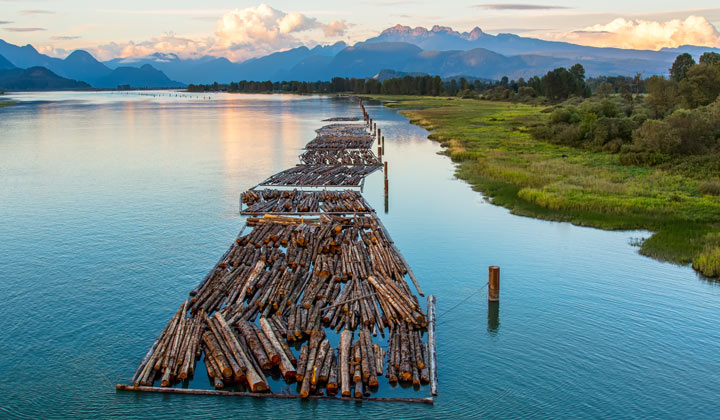
The idea of outlawing tree-cutting everywhere has a simple moral appeal: protect forests, preserve biodiversity, and lock away carbon. In practice, however, a blanket ban would produce a mix of ecological gains and unintended harms. The outcome would depend heavily on how the ban was written and enforced, where it applied (public vs private land), and what complementary policies were put in place for rural economies, fire management, and land use. A careful look at ecological, social, and economic dynamics shows why a strict prohibition is not a straightforward path to healthier forests.

Ecologically, many forests would initially benefit. Reduced commercial harvest would allow logged and secondary forests to regrow, increasing canopy cover and reconnecting fragments in regions where logging was the main driver of deforestation. That recovery would enhance habitat for forest-dependent species, improve water regulation, and boost carbon sequestration as biomass accumulates. Over decades, some landscapes would move toward older-growth conditions that are increasingly rare, restoring complex structures – multi-layered canopies, large deadwood, and tree cavities – that support diverse communities of plants, fungi, birds, mammals, and insects.

Yet forests are dynamic systems shaped by disturbance. In many ecosystems, disturbance regimes – fires, windstorms, insect outbreaks – create a shifting mosaic of different-aged patches that benefit a wider suite of species, including those that need open or early-successional habitats. If cutting trees is illegal and managers are prevented from using tools such as selective thinning, prescribed burning, or salvage logging after major disturbances, fuel loads could rise and make wildfires larger and more severe. In fire-prone regions, this could paradoxically kill more trees and reduce biodiversity at landscape scales. Similarly, dense, unmanaged stands may become more vulnerable to pests and pathogens that spread more easily where trees are crowded and stressed.

The social and economic consequences would be immediate and profound. Millions of people worldwide depend on forestry for jobs, income, and raw materials. A total ban would eliminate legal timber supply chains, increase unemployment in rural areas, and disrupt industries from construction to paper and furniture. The resulting shortages would raise the price of wood and wood-products, pushing consumers and industries toward alternatives such as steel, concrete, or plastics – materials that often carry larger carbon footprints and different environmental impacts. In many places, the sudden loss of legal options would drive illegal logging and black markets. Where enforcement capacity is weak or corruption is high, forests could be hit by more destructive, clandestine logging rather than managed, sustainable harvest.

Land tenure and property rights would become flashpoints. On public lands, a ban could be implemented more readily, but private landowners would resist losing rights to manage their property. Farmers and ranchers might clear forest illegally to expand agriculture before enforcement mechanisms were fully in place, or convert forested land to pasture if tree-cutting is banned but land-use change is not adequately policed. Internationally, countries that previously exported timber could shift their production elsewhere or intensify deforestation in other regions – an effect known as leakage – undermining global conservation goals.

Enforcement challenges are substantial. Policing vast forested areas requires resources, technology, and political will that many governments lack. A prohibition without capacity-building and incentives would favor well-funded criminal networks that can profit from illegal harvest. Conversely, combining strict protection with payments for ecosystem services, alternative livelihoods, and strong community-based forest governance can secure better outcomes, but those measures must be planned and financed.

Long-term carbon dynamics are complex. Initially, halting logging generally increases carbon uptake as forests regrow and biomass accumulates. Over centuries, mature forests store enormous carbon stocks, so preserving them contributes to climate mitigation. However, the rate of sequestration slows as stands age, and massive disturbances like megafires could release stored carbon rapidly. Moreover, if wood is simply substituted by carbon-intensive materials because timber is unavailable, net climate benefits could be smaller than expected.

A complete ban would also remove tools that ecologists and foresters use to maintain resilient landscapes. Sustainable forestry techniques – selective logging, reduced-impact harvests, rotation planning, and appropriately timed thinning – can provide wood while retaining biodiversity and reducing fuel accumulation. In many regions, active management by trained professionals and local communities improves forest health more than an unmanaged status quo.

In short, outlawing all tree-cutting would produce both winners and losers. Some forests would recover and biodiversity in closed-canopy habitats would benefit, but other species adapted to open, regenerating areas could decline. Fire and pest risks could increase without active management, and social upheaval, illegal harvesting, and substitution to more polluting materials would likely follow if bans are imposed without socially just, well-resourced alternatives. The most effective path toward healthier forests usually blends legal protection for critical areas, sustainable management where extraction continues, strong enforcement against illegal logging, and economic transitions for affected communities. Policy that balances conservation goals with ecological realities and human needs will protect forests far more reliably than a simple global prohibition on cutting trees.
Editor Note: A; C.