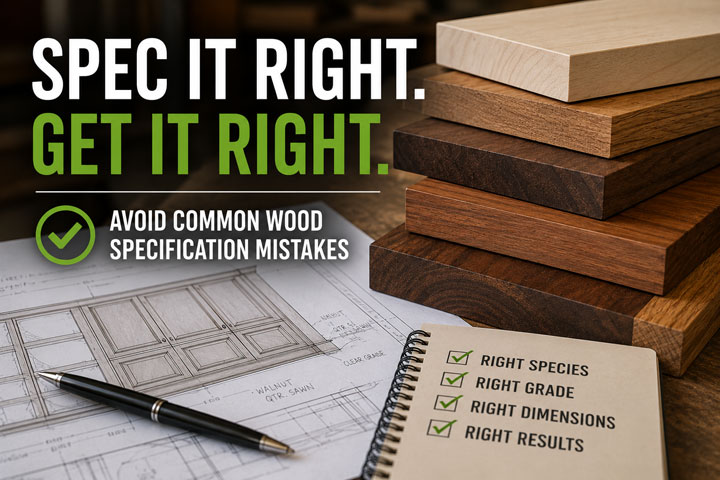
Specifying hardwood for an architectural project often seems straightforward. Select an attractive species, choose a grade, identify the dimensions, and move forward with fabrication.
In reality, successful wood specification is far more nuanced.
Every year, architects, builders, designers, and contractors encounter avoidable challenges because important details were overlooked during the specification process. Some projects experience unnecessary delays due to material availability. Others encounter installation problems caused by moisture movement. Some exceed their budgets because the specified grade or dimensions were more expensive than necessary. Still others require costly revisions after fabrication has already begun.
The good news is that most of these problems can be prevented.
By understanding a few common specification mistakes – and working closely with experienced hardwood suppliers – project teams can improve quality, reduce costs, and help ensure smoother project execution.
At J. Gibson McIlvain Co., decades of experience supplying premium hardwoods for residential, commercial, institutional, and architectural projects have demonstrated that thoughtful planning almost always produces better results than reactive problem-solving.
Mistake #1: Choosing Wood Based Only on Appearance
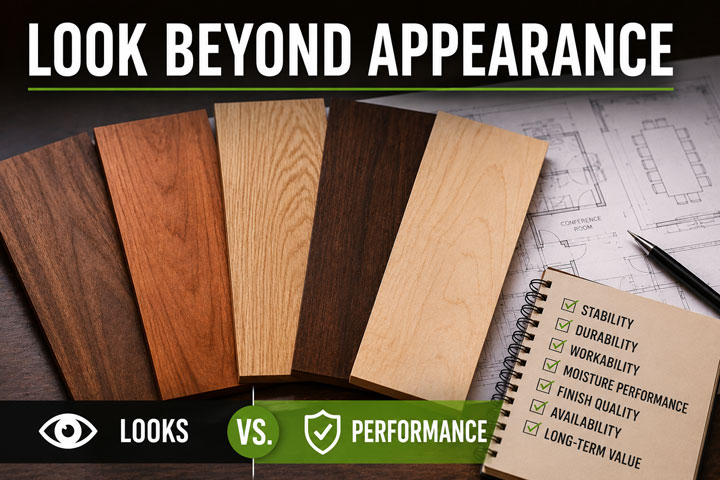
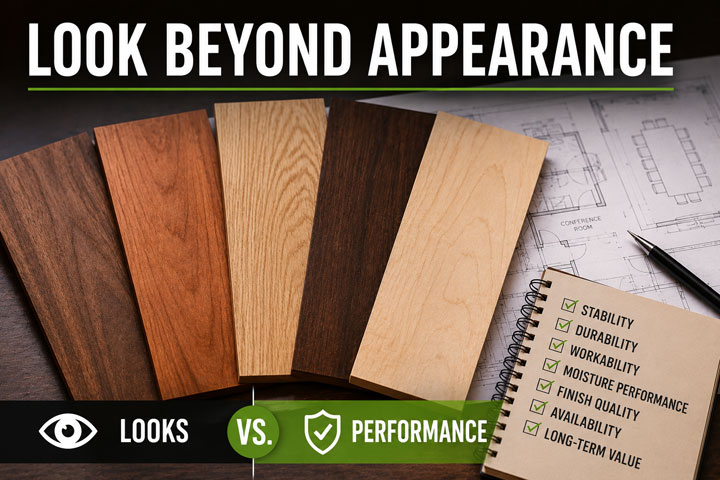
One of the most common specification mistakes is selecting a wood species based solely on color or grain.
Appearance is certainly important, particularly for visible architectural millwork, cabinetry, wall paneling, and furniture. However, aesthetics represent only one aspect of successful material selection.
Architects should also consider:
- Dimensional stability
- Workability
- Hardness
- Moisture performance
- Finishing characteristics
- Availability
- Long-term maintenance
For example, Walnut’s rich color and elegant grain make it a favorite for luxury interiors, but its excellent machining characteristics and dimensional stability also contribute to its popularity among millwork professionals.
Successful specifications balance appearance with performance.
Mistake #2: Ignoring the Environment Where the Wood Will Be Used
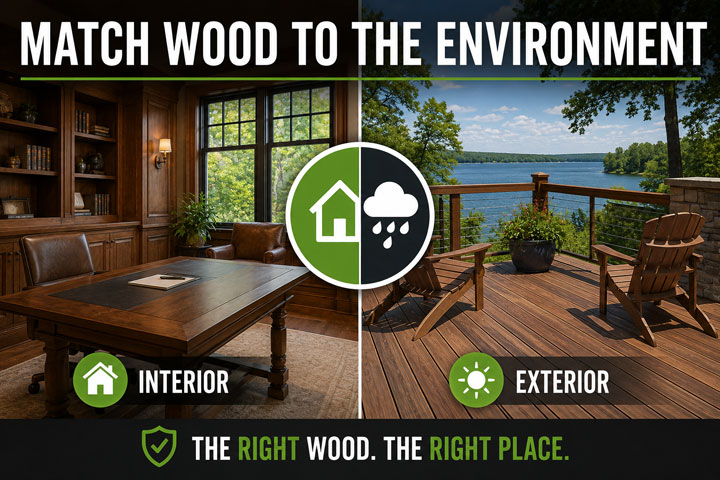
Wood performs differently depending upon its environment.
Interior cabinetry, exterior siding, commercial flooring, marine applications, and climate-controlled offices each expose lumber to different conditions.
Specifying wood without considering its intended environment may lead to unnecessary problems later.
Questions worth asking include:
- Will humidity fluctuate significantly?
- Will the material experience direct sunlight?
- Is the application exposed to moisture?
- Will heavy foot traffic occur?
- Is impact resistance important?
These factors often influence species selection just as much as appearance.
The right wood for an executive conference room may not be the right wood for an outdoor deck.
Mistake #3: Over-Specifying Lumber Grades
Many designers assume specifying the highest lumber grade everywhere automatically produces the best project.
In practice, this often increases costs without improving results.
Premium grades certainly have important applications, particularly for highly visible architectural features. However, concealed components, shorter cut parts, or painted assemblies may not require the same grade throughout the project.
Thoughtful grade selection frequently allows builders to reduce costs while preserving finished appearance.
This is one of the most effective forms of value engineering available in hardwood specification.
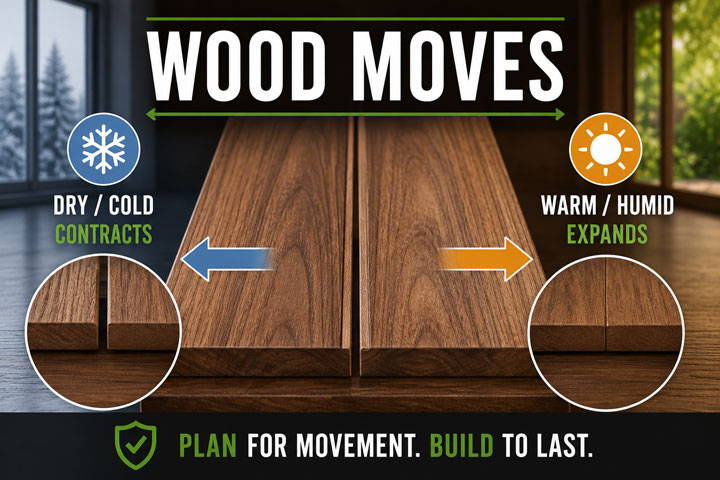
Mistake #4: Forgetting About Wood Movement
Wood is a natural material.
It continually responds to changes in temperature and humidity by expanding and contracting.
Ignoring this reality during specification can create installation problems including:
- Gaps
- Buckling
- Cupping
- Cracking
- Joint separation
Proper specifications account for seasonal movement through appropriate detailing, acclimation procedures, fastening methods, and installation practices.
Rather than trying to prevent wood movement, successful designs accommodate it.
Mistake #5: Waiting Too Long to Select Materials
Hardwood selection is sometimes postponed until late in the construction process.
Unfortunately, this can create scheduling challenges.
Certain species, dimensions, grades, or specialty millwork components may require additional production time.
Waiting until fabrication is ready to begin may limit available options or require project revisions.
Early coordination allows suppliers to:
- Verify availability
- Reserve inventory
- Coordinate milling
- Recommend alternatives if necessary
- Help maintain construction schedules
The earlier material discussions begin, the more flexibility project teams typically have.
Mistake #6: Overlooking Moisture Content
Moisture content plays a significant role in long-term wood performance.
Even perfectly manufactured lumber can experience unnecessary movement if moisture levels are not appropriate for its intended environment.
Professional specifications should consider:
- Kiln drying
- Storage conditions
- Jobsite acclimation
- Interior humidity
- Installation timing
Managing moisture properly helps reduce future movement and contributes to better long-term performance.
Mistake #7: Focusing Only on Initial Material Cost
Lowest purchase price does not always represent the lowest project cost.
When evaluating hardwood materials, architects and builders should also consider:
- Durability
- Maintenance
- Fabrication efficiency
- Waste
- Lifecycle costs
- Replacement frequency
Premium hardwoods often deliver greater long-term value because they remain beautiful and functional for decades.
A thoughtful specification evaluates ownership costs – not simply purchase price.
Mistake #8: Not Involving Your Hardwood Supplier Early Enough
One of the most overlooked project resources is the hardwood supplier.
Many suppliers possess decades of practical experience involving species selection, grading, fabrication, milling, logistics, and installation considerations.
Bringing them into the conversation early often helps identify opportunities that might otherwise be missed.
Experienced suppliers may recommend:
- Better species choices
- More economical grades
- Improved dimensions
- Alternative milling strategies
- Enhanced availability
- Better scheduling
These recommendations frequently reduce costs while improving project outcomes.
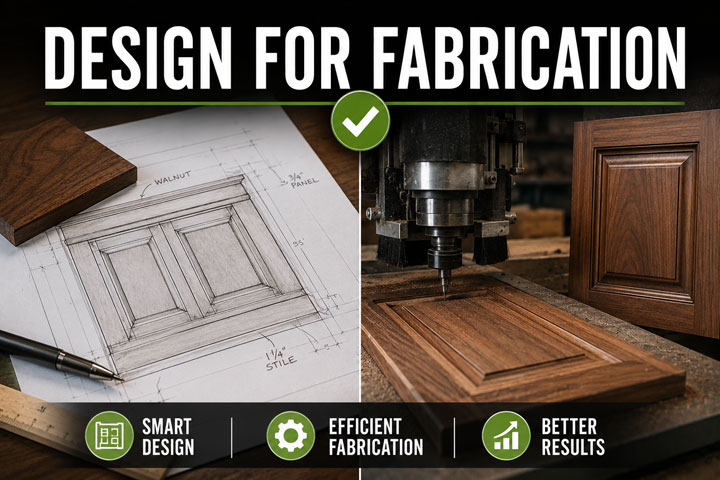
Mistake #9: Specifying Without Considering Fabrication
Architectural drawings sometimes specify dimensions or profiles that appear reasonable on paper but create unnecessary complexity during fabrication.
Minor design adjustments can often improve:
- Lumber yield
- Production efficiency
- Material utilization
- Manufacturing cost
- Installation simplicity
Collaboration between architects and millwork professionals early in the design process often produces solutions that maintain the design intent while simplifying production.
Good specifications consider not only how a project will look but also how it will be built.
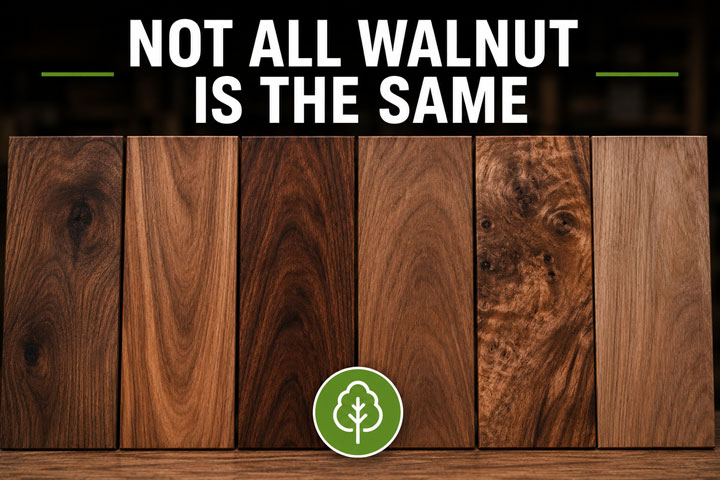
Mistake #10: Assuming All Walnut Is the Same
Walnut enjoys an outstanding reputation throughout the architectural community, but specifications should recognize that not every board is identical.
Natural variations occur in:
- Color
- Grain pattern
- Figure
- Character markings
- Sapwood content
These natural characteristics are part of what gives Walnut its unique beauty.
Clear communication regarding appearance expectations helps suppliers assemble material that aligns with the project’s design objectives.
Rather than viewing natural variation as a defect, many designers intentionally embrace it as one of hardwood’s greatest strengths.
Communication Prevents Costly Surprises
Many specification challenges ultimately come down to communication.
The more clearly architects, builders, designers, millwork shops, and suppliers communicate expectations, the fewer surprises tend to occur later.
Successful discussions often include:
- Intended application
- Desired appearance
- Budget priorities
- Schedule requirements
- Installation conditions
- Finish expectations
- Performance goals
These conversations help everyone work toward the same objectives before fabrication begins.
Better Specifications Create Better Projects
Great architecture depends upon thousands of thoughtful decisions.
Wood specification is one of those decisions that can quietly influence project quality, construction efficiency, budget, maintenance requirements, and long-term owner satisfaction.
Fortunately, most specification mistakes are entirely avoidable.
By selecting species based on both beauty and performance, understanding moisture movement, choosing appropriate grades, involving experienced suppliers early, and planning for fabrication from the beginning, architects and builders can eliminate many of the problems that commonly affect hardwood projects.
The result is more than simply avoiding mistakes.
It is creating buildings that are more beautiful, more durable, more efficient, and ultimately more valuable for everyone involved.
In the end, successful wood specification is not simply about choosing the right hardwood. It is about making informed decisions that allow exceptional materials to perform exactly as they were intended – for years, and often generations, to come.
Editor Note: A; C.